

CHECK OUT OUR NEW CALCULATORS

Sopressata Romana

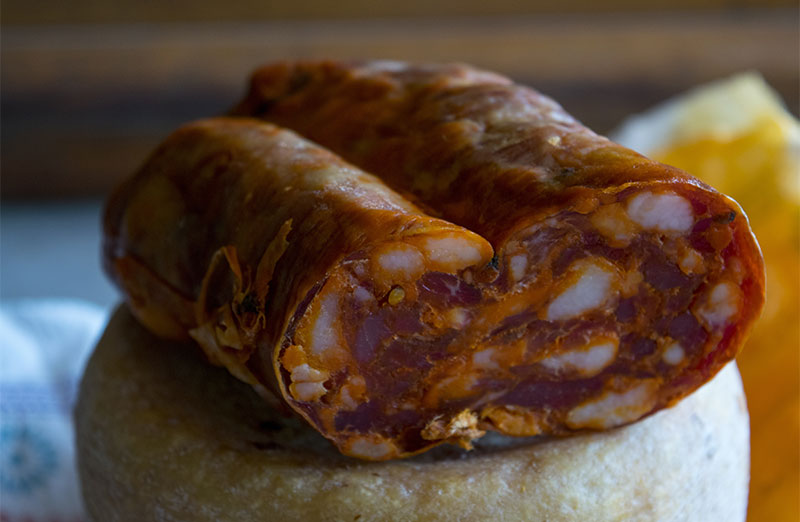
Sopressata Romana is one of those sausages that shows just how effective simplicity can be. In the wider world of Italian salumi, soppressata takes many forms depending on the region, with some styles running hotter, coarser, or more heavily seasoned than others. The name itself is generally linked to the old practice of pressing the sausage, which helped give certain styles their characteristic shape. A good sopressata should look beautiful when sliced, with a clean structure, well-defined fat, and the kind of visual character that tells you immediately it has been made with care.

What Makes Sopressata Romana Different?

What makes a good Sopressata Romana recipe different is not excess, but control. Across Italy, soppressata comes in many forms, with notable regional variation in texture, shape, and heat. The broader name is associated with pressed or compressed forms of salami, which helps explain why appearance and structure matter so much in this family of sausages.

For me, Sopressata Romana stands out because it feels more elegant than aggressive. It is a sausage where the slice should immediately tell you that the process was done well. You want good lean meat definition, clean fat distribution, and a finished texture that is firm, refined, and satisfying to cut. This is not just about flavour. It is also about visual appeal. A sausage like this should look beautiful on the board as well as taste good on the palate.

That is one of the reasons I keep coming back to it. So many dry-cured sausages rely on heavy spice, smoke, or bold fermentation character to make their point. Sopressata Romana does not need that. When it is done properly, the quality of the pork and the precision of the cure do most of the talking.

The Importance of Meat Quality in Sopressata Romana

A traditional Sopressata Romana recipe depends heavily on meat quality. Because the seasoning is restrained, there is very little to mask flaws in the raw ingredients. If the pork lacks character, the finished sausage will lack character. If the fat is soft, smeared, or poorly handled, the final slice will lose the clean definition that gives sopressata so much of its appeal.

This is why I see Sopressata Romana as a sausage of honesty. It asks for good pork, clean white fat, careful mixing, and the discipline to let the process work without interference. The salt, cure, fermentation, and drying all need to support the meat rather than compete with it. When that happens, the result is a dry-cured sausage with a deep savoury pork flavour, a balanced texture, and a slice that looks every bit as good as it tastes.

For anyone who enjoys fuet or saucisson sec, this will feel familiar. It belongs to that same world of sausages where simplicity raises the standard rather than lowering it. The fewer distractions there are, the more every detail matters.

How Much Spice Should Sopressata Romana Have?

One of the most appealing things about a Sopressata Romana recipe is that it gives you room to be restrained without becoming bland. In many traditional Italian styles, soppressata is not excessively hot, though some southern variants are much more assertive and can include chilli as a defining feature. That regional spread is part of what makes the soppressata family so interesting.

My own preference is to keep the spice measured, but not always minimal. I like the pork to stay at the centre, because that is where the real character of the sausage lives. At the same time, I sometimes increase the spice just enough to leave a gentle tingle. Not enough to overpower the sausage, and not enough to push it into a completely different style, but enough to give it a little more life on the finish.

That balance matters. Too little spice, and the sausage can feel flat if the meat is not exceptional. Too much spice, and you lose the refined, meat-forward character that makes Sopressata Romana so attractive in the first place. The aim, at least for me, is to let the heat sharpen the sausage rather than dominate it.

NEW TO DRY-CURED/ FERMENTED SAUSAGE MAKING?

Dry-cured and fermented sausage making is widely regarded as one of the most demanding aspects of charcuterie for curesmiths. For that reason, we generally recommend that beginners first focus on simpler whole-muscle cures, allowing them to develop a sound understanding of dry-curing principles and to refine their technique with greater confidence.

Once you are ready to begin making dry-cured and fermented sausages, we encourage you to consult our Dry-Cured Sausage Making Guide. It sets out the process step by step and is designed to help you produce successful dry-cured and fermented sausages from the very beginning.

GET THE DRY-CURED SAUSAGE MAKING GUIDE >>>

Health & Safety Disclaimer

By using any recipe on The Curesmith you automatically agree to our terms and accept that The Curesmith cannot be held liable for any illness, injury, loss or damage arising from its use. Click to read the full disclaimer.

Purpose and scope

The recipes published on The Curesmith are intended for educational and informational purposes only. Meat curing, fermentation and smoking involve processes that, if carried out incorrectly, can result in products that are unsafe to eat. By using any recipe on this website you acknowledge that you do so entirely at your own risk, and you agree that The Curesmith and its authors cannot be held liable for any outcome arising from its use.

Limitation of liability

The Curesmith and its authors accept no responsibility or liability for any illness, injury, loss or damage arising from the use of these recipes, including but not limited to illness caused by improperly cured, handled or cooked meat products, errors in measurement or technique, equipment failure, or deviation from the stated method or quantities.

Nitrite and cure safety

Meat curing involves the use of nitrite salts, which must be measured accurately and used strictly according to the quantities specified. Nitrite in excessive quantities is toxic. Please ensure you understand the following before proceeding:

  • Always use a calibrated digital scale accurate to at least one gram. For smaller batches, a scale accurate to 0.1g is strongly recommended.
  • Never exceed the stated cure amounts. Never substitute cure types without recalculating.
  • Store all curing salts clearly labelled, separately from regular salt, and out of reach of children.
  • Different cure products have different nitrite concentrations. Always check your manufacturer's label and adjust quantities accordingly.

Food hygiene and cross-contamination

Raw and cured meat products must be stored, handled and prepared in a clean environment using food-safe equipment. Hands, surfaces, tools and containers must be thoroughly cleaned and where appropriate sanitised before use. Cross-contamination between raw meat and ready-to-eat products must be avoided at all times.

Temperature control

Temperature control is critical throughout all curing and smoking processes. Inadequate temperature management can allow the growth of dangerous pathogens including Clostridium botulinum, Listeria monocytogenes, Salmonella and E. coli. A reliable refrigerator thermometer and a calibrated probe thermometer are essential pieces of equipment for anyone producing cured or smoked meat at home.

Uncooked cured products

Whole muscle products that are eaten without cooking, such as air-dried bresaola, coppa or prosciutto, must reach their target weight loss before consumption. Products that have not been cured and dried to the correct specification may not be safe to eat uncooked. Pancetta and guanciale cured to less than 38% weight loss must not be consumed uncooked.

Bacon and other uncooked cured products

Bacon and other uncooked cured products must be cooked thoroughly before eating. Cold smoking adds flavour and colour but does not cook the product. A cold-smoked bacon or sausage remains a raw product and must reach a safe internal temperature before it is safe to consume. For pork and beef this is 72°C / 162°F. For poultry this is 74°C / 165°F.

When in doubt, seek professional guidance

If you are unsure about any aspect of the curing, smoking or fermentation process, we strongly encourage you to seek formal training or guidance from a qualified food safety professional before proceeding. The information on this website is not a substitute for proper food safety education and training.

Commercial production

These recipes are produced for home and small-scale producers. They are not intended for commercial food production. Commercial meat processing is subject to regulatory requirements that vary by country and jurisdiction. If you intend to produce cured or smoked products for sale, you must ensure full compliance with all applicable food safety regulations in your region.

The Curesmith

Want more recipes like this?

Drop your email and we’ll send you new recipes, guides and tips as we add them. No spam — ever.

✓ You’re in! Continuing now…
Classic Sopressata Romana
Traditional Roman pressed dry-cured sausage with black pepper, chilli & red wine
StyleFermented dry-cured
Country of originItaly (Lazio)
CasingBeef middle, 50–60mm
CureCure #2
Target weight loss40%
Approx. yield~1.3 kg
Ingredients
g
Adjust to scale
the recipe

For dry-cured sausage we default to 1000g as the base weight — this makes the ingredient ratios easy to read and understand at a glance. The recipe scales to any batch size: simply change the weight in the box above and all amounts update automatically.

Meat & fat
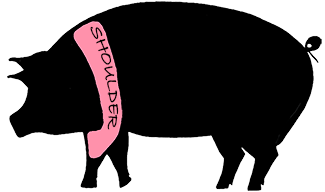
Pork shoulder 100% 1000 g
Back fat 25% of total mix 250 g
For authentic marbling, cut the back fat by hand into 5mm cubes while frozen hard. This preserves distinct fat pockets and prevents smearing. Alternatively grind on a 6mm plate kept very cold — but hand-cutting is strongly preferred for Sopressata.
Total mix 1250 g
Cure & salt
Salt (additional) 2.24% target 25.1 g
Cure #2 is approximately 94% sodium chloride. This additional salt, combined with the salt already in the cure, brings the total to your 2.24% target (28g per kg of pork).
Cure #2 for 156 ppm 3.12 g
Seasoning
Dextrose 0.40% of total mix 5.0 g
Dextrose is preferred for fermented sausages as it is more predictable with starter cultures. If substituting sugar, use 60% of the dextrose weight.
Sugar quantity for this recipe: 3.0 g
Black pepper, ground 0.32% of total mix 4.0 g
Chilli flakes 0.32% of total mix 4.0 g
Red wine 2.64% of total mix 33 g
Use a dry, robust red wine. Chill to below 4°C before use and add to the farce last, after all other ingredients are fully incorporated. Weigh the wine — do not measure by volume.
Starter culture
Flora Italia LC 0.13g per kg 0.13 g
Water (to dissolve culture) 20g per kg (distilled) 20 g
Flora Italia LC dose: 0.13g per kg of pork. If you do not have a precision scale, use 1g — you cannot meaningfully overdose a starter culture. Dissolve in the water shown above before adding to the meat.

This ratio is based on the manufacturer’s label recommendation of 25g per 200kg of meat. It is important to check the label of your specific product as dosage recommendations do vary by region and supplier — update accordingly.

T-SPX is a suitable alternative if Flora Italia LC is unavailable. Both are mild cultures well suited to traditional Italian-style fermented sausages.
Nitrite safety check
Nitrite (NO₂)
156.5ppm
Nitrate (NO₃)
100.2ppm
Nitrite level156.5 / 200 ppm max
0156 ppm200 ppm
Safe
Within safe limits. Effective for pathogen control throughout the full drying and ageing period.
Important: minimum weight loss before consuming Sopressata Romana must reach a minimum weight loss of 35% before it is safe to consume uncooked, but our target weight loss is 40%. The higher fat content requires greater moisture loss to reach a safe water activity. Do not taste or eat the sausage until the minimum is confirmed by weighing.
Method
1
Chill everything thoroughly. Place the pork shoulder in the freezer for 30 minutes before grinding. Freeze the back fat until very hard — ideally just below freezing. Cold fat is essential to prevent smearing and ensure the characteristic visible marbling of Sopressata.
2
Prepare the fat. Cut the frozen back fat into 5mm cubes by hand. This is the preferred method for Sopressata Romana — hand-cut fat stays firm, cuts cleanly and creates the distinct white fat pockets that are the hallmark of the style. If grinding, use a coarse plate (8–10mm) and keep the fat as cold as possible. Set aside and refrigerate.
3
Grind the pork. Pass the pork shoulder through a 6mm plate. Keep refrigerated between steps.
4
Prepare the cure and seasoning mix. Combine the salt, Cure #2 (or Savianda), dextrose, ground black pepper and chilli flakes. Mix thoroughly to ensure even distribution before adding to the meat.
5
Dissolve the starter culture. Mix the Flora Italia LC into cold distilled water and set aside. This ensures even distribution throughout the farce.
6
Mix the farce. Combine the ground pork with the cure and seasoning blend and work it in until evenly seasoned and slightly tacky. Add the dissolved culture and mix through. Gently fold in the cubed back fat — do not overmix or the fat will smear. Finally add the chilled red wine and mix until just incorporated. To test that sufficient myosin extraction has taken place, roll a small amount of farce into a ball and press it firmly to your palm. Turn your palm face down — the farce should cling without falling for at least 20 seconds. This confirms proper protein extraction, which ensures the finished sausage will be firm and hold together cleanly when the target weight loss is reached. If it falls, continue mixing and test again.
7
Stuff the casings. Stuff into beef middle casings (50–60mm) firmly, avoiding air pockets. Tie off at 20–25cm lengths. Prick any visible air pockets with a sterile pin.
8
Apply surface mold (optional but recommended). Immediately after stuffing, mist or dip the casings with a diluted Mold 600 (Penicillium nalgiovense) solution, prepared per the manufacturer’s instructions. Surface mold regulates moisture loss, protects the casing and contributes to the characteristic white bloom and complex flavour of a traditional Sopressata.
9
Fermentation phase. Hang at 22–26°C and 85–90% relative humidity for 12–24 hours. Monitor pH with a calibrated meter and transfer to pressing once pH 5.3 is confirmed.
10
Pressing phase. Once fermentation is complete, press the sausages between two clean boards weighted with a heavy object. Press for 24–48 hours at refrigerator temperature (2–4°C). This flattens the sausage into the characteristic oval cross-section of Sopressata and encourages even moisture distribution. Turn and re-press after 12 hours.
11
Drying phase. Transfer to a drying chamber at 12–14°C and 73–75% relative humidity. The beef middle casing and higher fat content mean drying is slower than thinner sausages. Begin checking weight loss from week 3.
12
Monitor weight loss. Weigh the sausages weekly from the start of drying. Record the pre-drying (green) weight so you can track percentage loss accurately. The sausage is ready when it has reached 40% weight loss. We provide a Production Log in the downloadable Excel file to help you track weight loss accurately.
Key tips Keep everything cold throughout -- frozen fat is non-negotiable for visible marbling. Fold the fat in gently at the end to avoid smearing. Add the red wine last and chilled. Press firmly and evenly -- even pressure produces the best cross-section. Begin checking weight from week 3.
Production parameters
Fermentation12–24 hrs  •  22–26°C  •  85–90% RH
Pressing24–48 hrs  •  2–4°C
Drying temperature12–14°C
Humidity73–75% RH
Drying time5–7 weeks
Minimum weight loss35%
Target weight loss40%
RecipeEmailCapture
Scroll to Top