


Want more recipes like this?
Drop your email and we’ll send you new recipes, guides and tips as we add them. No spam — ever.
✓ You’re in! Continuing now…
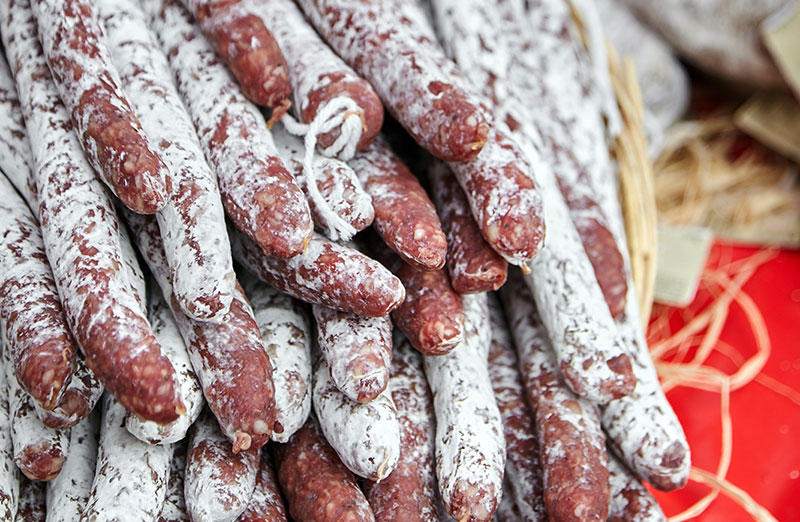
Classic Fuet
Traditional Catalan dry-cured fermented pork sausage with white wine & white pepper
Ingredients
g
Adjust to scale
the recipe
the recipe
For dry-cured sausage we default to 1000g as the base weight — this makes the ingredient ratios easy to read and understand at a glance. The recipe scales to any batch size: simply change the weight in the box above and all amounts update automatically.
| Meat & fat | ||
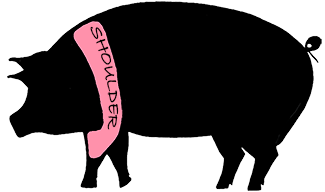
| Pork shoulder | 100% | 1000 g |
| Back fat | 20% of pork | 200 g |
| Fuet is slightly leaner than most other dry-cured sausages. You may increase back fat to 25% for a slightly richer texture, but keep it at 20% for an authentic Catalan style. | ||
| Total mix | 1200 g | |
| Cure & salt | ||
| Salt (additional) | 2.0% of total mix | 22.2 g |
| Cure #2 is approximately 94% sodium chloride. This additional salt, combined with the salt already in the cure, brings the total to your 2.0% of total mix target. | ||
| Cure #2 | for 156 ppm | 2.99 g |
| Seasoning | ||
| Dextrose | 1.0% of total mix | 10.0 g |
| Dextrose is preferred for fermented sausages as it is more predictable with starter cultures. If substituting sugar, use 60% of the dextrose weight. | ||
| Sugar quantity for this recipe: 6.0 g | ||
| Garlic powder | 0.1% of total mix | 1.0 g |
| White pepper, ground | 0.5% of total mix | 5.0 g |
| Dry white wine | 5.0% of total mix | 50 g |
| Use a dry, unoaked white wine. Chill to below 4°C before use and add to the farce last, after all other ingredients are fully incorporated. The wine adds moisture — do not increase beyond the stated amount or it may extend drying time. | ||
| Starter culture | ||
| Flora Italia LC | 0.13g per kg | 0.13 g |
| Water (to dissolve culture) | 20g per kg (distilled) | 20 g |
| Flora Italia LC dose: 0.13g per kg of pork. If you do not have a precision scale, use 1g — you cannot meaningfully overdose a starter culture. Dissolve in the water shown above before adding to the meat. This ratio is based on the manufacturer’s label recommendation of 25g per 200kg of meat. It is important to check the label of your specific product as dosage recommendations do vary by region and supplier — update accordingly. T-SPX is a suitable alternative if Flora Italia LC is unavailable. Both are mild, slow cultures well suited to traditional Catalan-style fermented sausages. |
||
Nitrite safety check
Nitrite (NO₂)
156.0ppm
Nitrate (NO₃)
99.8ppm
Nitrite level156.0 / 200 ppm max
0156 ppm200 ppm
Safe
Within safe limits. Effective for pathogen control throughout the full drying and ageing period.
Important: minimum weight loss before consuming
Fuet must reach a minimum weight loss of 35% before it is safe to consume uncooked, but our target weight loss is 38%. Do not taste or eat the sausage until the minimum is confirmed by weighing.
Method
1
Chill everything thoroughly. Place the pork shoulder and back fat in the freezer for 30 minutes before grinding. Cold fat cuts cleanly rather than smearing through the grinder plate.
2
Grind the meat and fat. Pass the pork shoulder through a fine plate (4.5–6mm) for a smooth, tight texture characteristic of Fuet. Pass the back fat through the same plate separately. Refrigerate between steps.
3
Prepare the cure and seasoning mix. Combine the Cure #2 (or Savianda) and salt with the sugar, garlic powder and white pepper. Mix thoroughly to ensure even distribution before adding to the meat.
4
Dissolve the starter culture. Mix the Flora Italia LC into cold distilled water and set aside. This ensures even distribution throughout the farce.
5
Mix the farce. Combine the ground pork and fat. Add the cure and seasoning blend and work it in until evenly seasoned and slightly tacky. Add the dissolved culture and mix through. Finally add the chilled white wine and mix until just incorporated. To test that sufficient myosin extraction has taken place, roll a small amount of farce into a ball and press it firmly to your palm. Turn your palm face down — the farce should cling without falling for at least 20 seconds. This confirms proper protein extraction, which ensures the finished sausage will be firm and hold together cleanly when the target weight loss is reached. If it falls, continue mixing and test again.
6
Stuff the casings. Stuff into hog casings (30–40mm) firmly, avoiding air pockets. Tie off at 30–35cm lengths. Prick any visible air pockets with a sterile pin.
7
Fermentation phase. Hang at 22–26°C and 85–90% relative humidity for 12–24 hours. Flora Italia LC is a moderately fast culture that typically reaches the target pH of 5.3 within this window. Monitor with a calibrated pH meter and transfer to the drying chamber once pH 5.3 is confirmed — do not rely on colour strips.
8
Apply surface mold (optional but recommended). Immediately after stuffing, mist or dip the casings with a diluted Mold 600 (Penicillium nalgiovense) solution, prepared per the manufacturer’s instructions. Surface mold regulates moisture loss, protects the casing during drying and contributes to the characteristic white bloom and complex flavour of a traditional Fuet.
9
Drying phase. Transfer to a drying chamber at 12–14°C and 73–75% relative humidity. Begin checking weight loss from week 2.
10
Monitor weight loss. Weigh the sausages weekly from the start of drying. Record the pre-drying (green) weight so you can track percentage loss accurately. The sausage is ready when it has lost a minimum of 35% of its green weight, with 38% as the target. We provide a Production Log in the downloadable Excel file to help you track weight loss accurately.
Key tips
Keep everything cold before and during mixing. Add the white wine last and chilled — never at room temperature. A fine grind (4.5–6mm) gives Fuet its characteristic smooth, tight texture. Begin checking weight from week 2. Apply Mold 600 immediately after stuffing for best results. Do not skip the fermentation phase.
Drying parameters
Fermentation12–24 hrs • 22–26°C • 85–90% RH
Drying temperature12–14°C
Humidity73–75% RH
Drying time3–4 weeks
Minimum weight loss35%
Target weight loss38%